


Understanding skills gaps and career barriers for early-stage researchers in Latvia
What holds early-stage researchers back when moving beyond academia? Although still ongoing, interviews with Latvian organisations already reveal recurring skills gaps, structural barriers, and missed connections between research and the labour market.
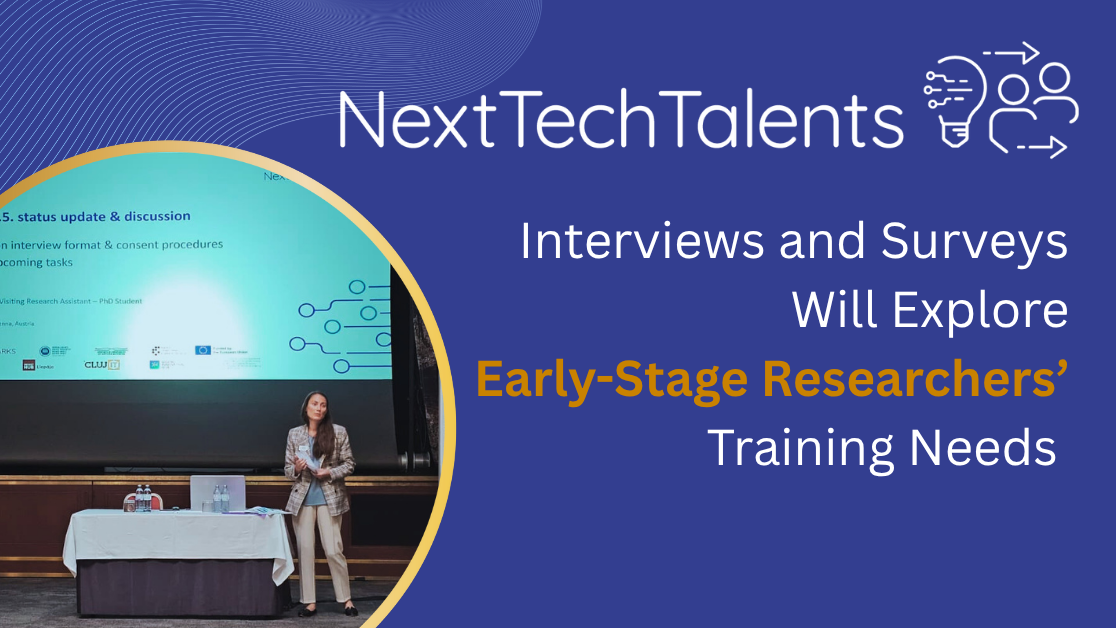
As part of the NextTechTalents project, interviews with organisations across Latvia are highlighting the challenges early-stage researchers face when transitioning into industry and non-academic careers. While in-depth analysis is still ongoing, early insights already point to skill gaps, structural barriers, and the need for stronger links between academia and practice – especially in deep tech and digital fields.
Mapping real-world needs beyond academia
Within the NextTechTalents project, an in-depth needs assessment is being conducted for early-stage researchers (ECRs), including doctoral and postdoctoral researchers. This assessment is based on anonymous interviews with organisations ranging from SMEs and large companies to NGOs and global corporations operating in sectors such as IT, logistics, energy, consultancy, and digital technologies.
The purpose of these interviews is to better understand what organisations need from research-trained talent, which barriers limit collaboration, and where current training paths fall short when researchers enter the labour market.
Skills gaps: strong research, limited business readiness
Across interviews conducted in Latvia, organisations consistently highlighted that ECRs are well prepared for academic research but often struggle when expected to operate in business-driven environments. Respondents pointed to challenges such as limited understanding of business processes, difficulty translating research into market-ready solutions, and weak communication with non-academic stakeholders.
Soft skills emerged as a recurring theme. Communication, adaptability, self-sufficiency, and the ability to work under uncertainty were frequently mentioned as critical, yet unevenly developed competencies. Several organisations also noted low stress resistance and difficulty adapting to fast-paced, agile working cultures outside academia.
The growing importance of AI and digital skills
Digital transformation and artificial intelligence were identified as key drivers for future talent needs. While technical expertise remains essential, organisations increasingly value the ability to apply AI in real-world contexts, adapt quickly to new technologies, and support knowledge transfer within teams.
At the same time, interviewees highlighted a shortage of professionals capable of teaching and transferring AI-related knowledge, pointing to an urgent need for “train-the-trainer” approaches and applied digital education.
Collaboration exists but often in parallel worlds
Most interviewees reported prior collaboration with universities, mainly through internships, project partnerships, or research support. However, many described academia and industry as operating in separate “bubbles”, with limited day-to-day exchange and misaligned expectations.
While collaboration is generally seen as valuable, barriers such as bureaucracy, limited funding flexibility, and a lack of structured interaction mechanisms were frequently mentioned. Several organisations stressed that more regular dialogue and shared frameworks are needed to align research training with labour market realities.
Mobility, retention, and structural constraints
Mobility itself was not always seen as the main obstacle. Instead, financial constraints, administrative complexity, and salary expectations were more commonly mentioned as barriers to attracting and retaining ECRs. Some organisations noted that young researchers often have high expectations regarding salary, flexibility, and career progression, while employers face limits in meeting these demands, especially in smaller organisations.
Early conclusions and next steps
Although the detailed analysis is still underway, the interviews already point to several recurring challenges in Latvia:
- a gap between academic training and business-oriented skills,
- limited exposure to entrepreneurship and applied innovation,
- insufficient communication and collaboration frameworks between academia and industry,
- growing pressure to adapt to AI-driven change without enough skilled trainers.
By grounding future actions in real-world perspectives, NextTechTalents aims to support early-stage researchers in building skills, confidence, and career pathways that extend beyond academy, helping research talent thrive across sectors in a rapidly evolving digital landscape.
References
This article is based on anonymised stakeholder interviews conducted in Latvia within the NextTechTalents project.
Keywords
early-stage researchers, skills gaps, academia-industry collaboration, career development, Latvia