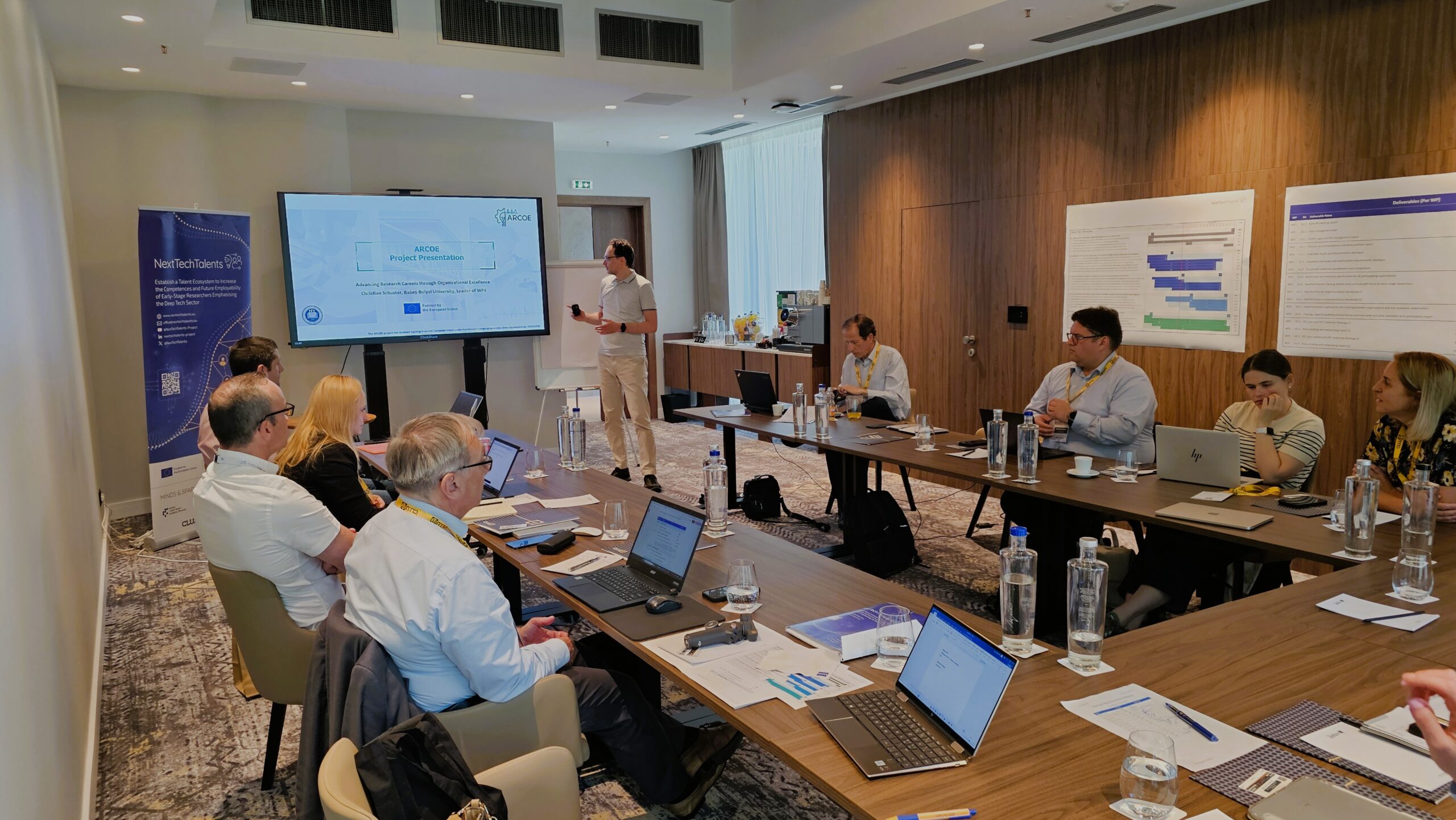



Ensuring diversity and inclusiveness in research interviews
Who gets heard in research, and who does not?
Inclusive interviews are essential for capturing diverse perspectives and producing meaningful, high-quality insights.
Interviews are a central method in qualitative research, enabling in-depth exploration of experiences, perceptions, and social realities. However, interviews are not neutral tools. Their design, structure, and implementation influence who participates, how individuals respond, and what knowledge is ultimately produced.
Ensuring diversity and inclusiveness in research interviews is therefore essential, not only from an ethical perspective but also for improving the validity, depth, and reliability of research outcomes [1][4].
Why inclusiveness matters in research interviews
Qualitative research depends on capturing a broad range of perspectives. When certain groups are excluded or underrepresented, findings risk being incomplete or systematically biased [4].
Inclusive interviews contribute to:
- capturing diverse lived experiences
- improving the robustness and validity of findings
- strengthening credibility and trustworthiness
- supporting ethical and responsible research practices
Importantly, qualitative research recognises that knowledge is co-constructed between researcher and participant. This means that the interview context, including communication style, accessibility, and power relations, directly shapes the data generated [1].
Research further shows that inclusive approaches enhance data quality by enabling participants to share more open, nuanced, and context-rich responses, ultimately improving the relevance and applicability of findings [7].
Barriers to inclusive participation
Barriers to inclusiveness in research interviews are often interconnected and operate across multiple levels.
Methodological and design-related barriers
Highly rigid interview formats, limited adaptation of questions, and lack of flexibility can restrict participants’ ability to express their perspectives [1].
Language and communication barriers
Insufficient attention to linguistic diversity can significantly limit participation. Studies show that interviews are often conducted only in dominant languages, with limited use of translation or interpretation support, which affects both access and data quality [6].
Technological and accessibility barriers
Online interviews can increase access for some participants, especially those who are geographically dispersed or require anonymity. At the same time, they can exclude individuals without reliable technology or private spaces, illustrating the dual nature of digital methods [7].
Structural and resource-related barriers
Limited funding, time constraints, and institutional support can restrict the ability to implement inclusive practices, such as translation services or targeted outreach [6].
Researcher-related barriers
A lack of training in inclusive methodologies, cultural sensitivity, and reflexivity can limit the effectiveness of interviews and reduce participant engagement [5].
Methodological approaches to inclusive interviews
Ensuring diversity and inclusiveness in research interviews requires balancing structure, flexibility, and contextual adaptation. Evidence shows that no single approach is universally effective; instead, strategies must be tailored to the target population and research context.
Structured yet adaptive interview design
Structured interviews can support consistency and comparability, particularly when exploring perspectives within a clearly defined group. A common set of questions enables systematic analysis and strengthens the rigor of findings.
At the same time, inclusiveness requires that structured designs remain adaptable. Allowing participants to clarify, elaborate, and contextualise their responses ensures that diverse perspectives are meaningfully captured. Combining structure with flexibility has been shown to improve both inclusiveness and data quality [1][3].
Purposeful and diversity-oriented sampling
Inclusive research relies on intentional participant selection. Purposeful sampling enables researchers to include participants who are relevant to the research objectives while ensuring diversity across key dimensions such as context, background, or experience [4].
Research indicates that combining purposeful sampling with multiple recruitment channels can significantly improve diversity, whereas convenience sampling often results in more homogeneous samples [6].
Accessible and flexible data collection
Inclusive interviews require adapting data collection methods to participants’ needs. Offering different formats, such as online or hybrid approaches, can increase accessibility and participation.
However, studies show that the effectiveness of these formats depends on accompanying support measures, including:
- technical assistance
- flexible scheduling
- alternative participation options
Without such support, accessibility barriers may persist or even increase [7].
Addressing language diversity
Language remains a critical yet often under-addressed dimension of inclusiveness. Providing opportunities for participants to engage in their preferred language, as well as offering translation or interpretation support, can significantly improve both participation and data quality [6].
Despite its importance, research shows that linguistic inclusiveness is frequently limited by resource constraints, indicating the need for deliberate planning and investment.
Reflexivity and researcher capacity
The interviewer plays an active role in shaping the research process. Reflexivity, understood as critical reflection on one’s own assumptions and positionality, is essential for ensuring credible and inclusive research [1].
Evidence highlights the importance of training in:
- cultural competency
- trauma-informed approaches
- inclusive communication
Such training enables researchers to create safe, respectful environments and engage effectively with diverse participants [5].
There is no one-size-fits-all approach to inclusive interviews. Effective practices depend on the alignment between research design, participant needs, and available resources.
From data collection to analysis
Inclusiveness extends beyond data collection to the analysis phase.
Inductive approaches, such as thematic analysis, allow patterns to emerge from the data while preserving diverse perspectives [2]. Researchers should:
- avoid overgeneralisation
- recognise minority and divergent viewpoints
- retain participants’ original meanings and contexts
Inclusive analytical practices help ensure that diverse voices are accurately represented in research findings.
Conclusion
Ensuring diversity and inclusiveness in research interviews is fundamental to producing meaningful, reliable, and ethically sound knowledge. It requires a combination of structured design, methodological flexibility, and continuous reflection.
Research shows that inclusive interview practices not only improve fairness but also enhance the quality and relevance of findings by incorporating a wider range of perspectives. As such, inclusiveness should not be viewed as an optional addition, but as a core component of rigorous qualitative research.
References
[1] Kvale, S. and Brinkmann, S. (2009). InterViews: Learning the craft of qualitative research interviewing (2nd ed.). Sage Publications, Inc.
[2] Braun, V., & Clarke, V. (2006). Using thematic analysis in psychology. Qualitative Research in Psychology, 3(2), 77–101. https://doi.org/10.1191/1478088706qp063oa
[3] Charmaz, K. (2014). Constructing Grounded Theory (2nd ed.). SAGE Publications.
[4] Creswell, J. W. and Poth, C. N. (2018). Qualitative Inquiry and Research Design: Choosing Among Five Approaches (5th ed.). SAGE Publications.
[5] Warren, S. and Vincent, C. (2001). This won’t take long…”: Interviewing, ethics and diversity. International Journal of Qualitative Studies in Education. https://doi.org/10.1080/09518390010007674
[6] Fryer, C. et al. (2012). Qualitative studies using in-depth interviews with older people from multiple language groups: methodological systematic review. Journal of Advanced Nursing. https://doi.org/10.1111/j.1365-2648.2011.05719.x
[17] Upadhyay, U. and Lipkovich, H. (2020). Using online technologies to improve diversity and inclusion in cognitive interviews with young people. BMC Medical Research Methodology. https://doi.org/10.1186/s12874-020-01024-912
Keywords
qualitative research, research interviews, inclusiveness, diversity, structured interviews, methodological approaches, participant-centred research, reflexivity, thematic analysis, purposive sampling, accessibility, research ethics