Cluj Innovation Days 2026 workshop maps out skills for the AI era
AI can’t replace human judgement, Cluj workshop concludes.
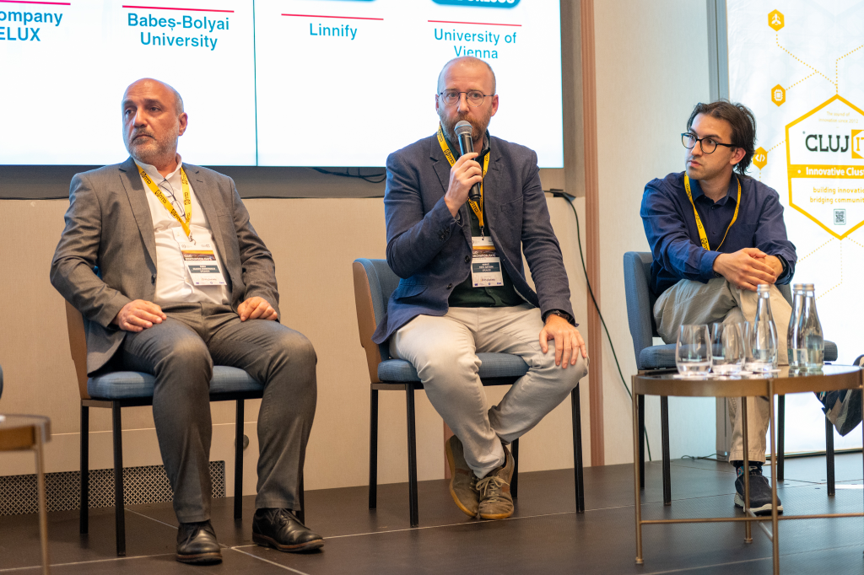
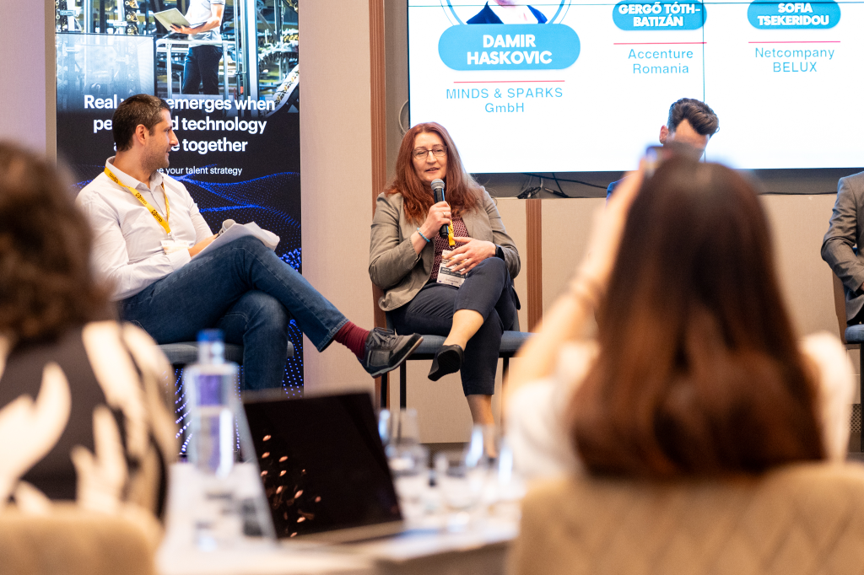
On 29 May 2026, the NextTechTalents project organised the workshop “Deep Tech, AI, and Future Generations” during Cluj Innovation Days 2026 in Cluj-Napoca. The event was hosted by Cluj IT and moderated by dr. Damir Haskovic, the manager of the NextTechTalents project, bringing together representatives from academia, industry, start-ups, European projects and the early-career research community.
The discussion focused on a central question for the future of European research: what skills will early-career researchers need in a world increasingly shaped by artificial intelligence and deep technologies?
Contributors included Gergő Tóth-Bataizán, Head of Data & AI at Accenture Romania; Dr Sofia Tsekeridou, Senior Research and Innovation Manager at Netcompany BELUX; Professor Radu Silaghi-Dumitrescu, President of the Scientific Council of Babeș-Bolyai University; Răzvan Bretoiu, Co-Founder and CTO of Linnify; and Bogdan Teodorescu, junior researcher and Master’s student at the University of Vienna.
Why technical skills are no longer enough
A key conclusion was that technical excellence alone is no longer sufficient. AI can accelerate calculations, data processing and technical analysis, but researchers remain responsible for identifying meaningful problems, interpreting results, assessing risks and ethical implications, and communicating knowledge clearly. Human judgement, critical thinking and the ability to collaborate across disciplines therefore become even more important as AI capabilities increase.
AI can accelerate calculations, data processing and technical analysis, but researchers remain responsible for identifying meaningful problems, interpreting results, assessing risks and ethical implications, and communicating knowledge clearly.
Communication, collaboration and real-world connections
Science communication was highlighted as a core research competence. Researchers need to explain complex ideas not only to other scientists, but also to companies, policymakers and the wider public. At the same time, universities should provide more structured opportunities to develop transversal skills such as teamwork, networking, negotiation and decision-making under uncertainty.
The workshop also emphasised the importance of stronger links between research and real-world needs. Cooperation with companies can help students and researchers understand users, work on concrete challenges and translate scientific knowledge into practical solutions.
European research projects and mentoring were identified as important opportunities for early-career researchers. International collaboration can provide access to new expertise, networks and career paths, while mentors can help young researchers navigate interdisciplinary work, European consortia and professional development.
The workshop confirmed the relevance of the NextTechTalents approach: preparing the next generation of researchers requires coordinated action from universities, research organisations, companies, start-ups and regional innovation ecosystems. As AI continues to transform the way knowledge is produced and applied, researchers will need both strong scientific expertise and the ability to communicate, adapt, collaborate and connect research with society and real-world challenges.