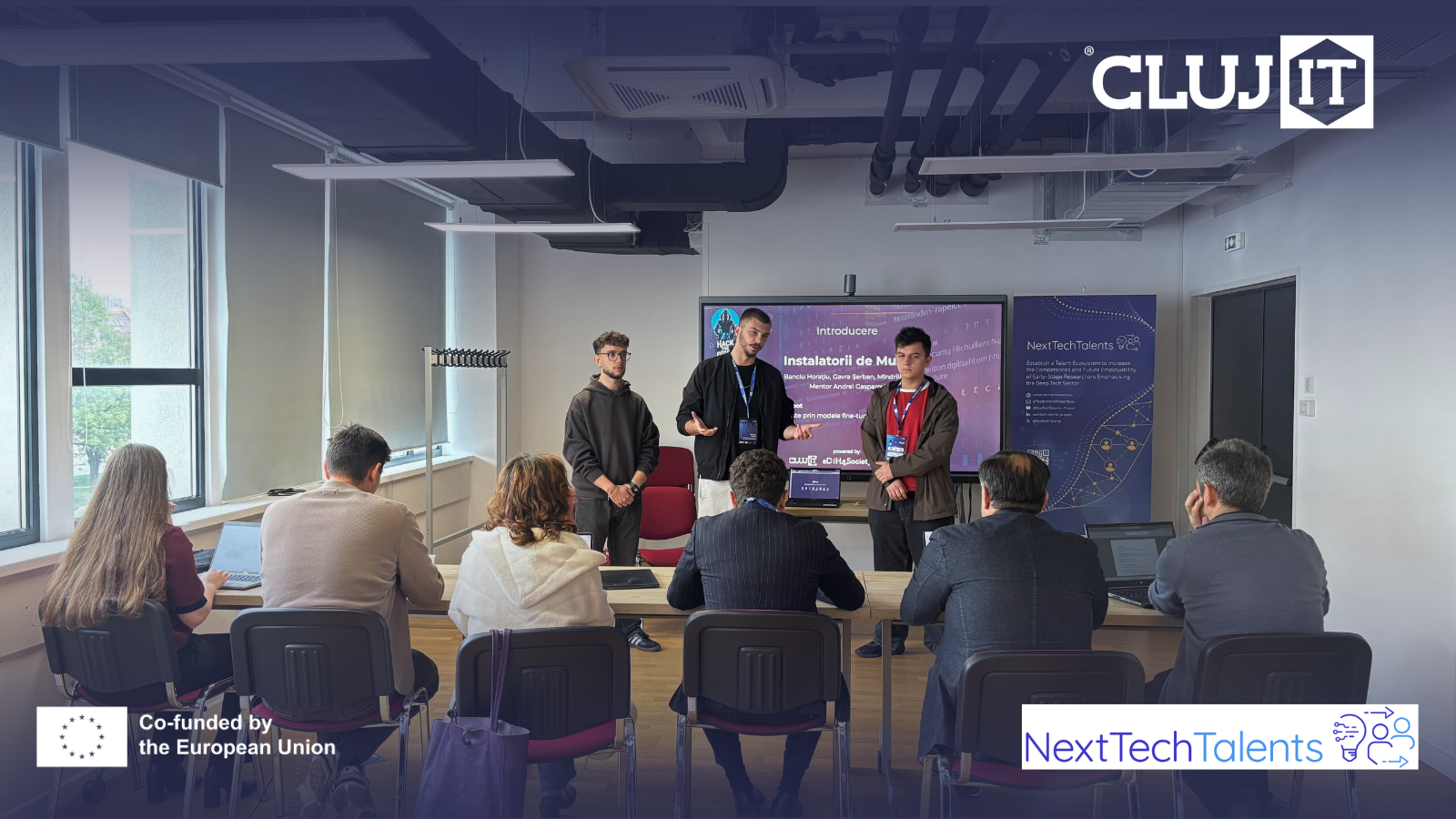



Best practices for supporting early-stage researchers’ career pathways
Across Europe, research careers are increasingly shaped by two important frameworks: the European Charter for Researchers and ResearchComp. Together, they provide a shared vision for making research careers more attractive, transparent, and sustainable. While these frameworks set out clear principles, their real impact depends on how they are implemented within national systems and institutions. This article explores how different European ecosystems translate these principles into practice and highlights lessons that can benefit both policymakers and the general public interested in the future of research.
Comparative analysis of national ecosystems
European countries show different levels of alignment with the Charter and ResearchComp, largely influenced by funding structures, labour regulations, and broader socio-economic conditions. In Austria, for example, funding schemes place a strong emphasis on mentoring and career planning, and they actively support international mobility by enabling researchers to return after time abroad. However, strict legal limits on fixed-term contracts can unintentionally push researchers out of the system if permanent positions are not available.
Ireland presents another strong example of alignment, particularly in linking research careers with industry needs and encouraging mobility between sectors. At the same time, the high cost of living in major innovation hubs such as Dublin and Cork reduces the real value of research stipends, which directly affects researchers’ working conditions.
In Slovenia, the system offers a well-structured entry point for doctoral candidates, ensuring stability at the beginning of a research career. Nevertheless, researchers often face challenges when trying to transition to independent roles, as the system tends to favour established research groups over individual progression.
Romania has introduced promising schemes that support early independence, particularly for researchers moving from doctoral to more advanced stages. However, irregular funding calls and budget fluctuations make long-term career planning difficult and create uncertainty for early-stage researchers.
Latvia demonstrates how European structural funds can be used effectively to raise salaries and attract talent. While this approach has short-term benefits, it also creates long-term risks, as research careers become dependent on funding cycles that may not be sustained in the future.
Taken together, these examples show that even well-designed systems face structural challenges, especially when it comes to stability, independence, and predictability.
Institutional focus: bringing the Charter into practice
While national frameworks set the conditions, institutions ultimately determine how researchers experience their careers. The analysis of consortium partners reveals varying degrees of alignment, shaped by institutional strategies and levels of maturity.
Munster Technological University represents a strong example of a mature institutional approach. As a holder of the “HR Excellence in Research” award, it has developed a structured career framework that clearly defines competencies and progression pathways. Importantly, it has embedded gender equality principles into its core operations, ensuring that research environments are inclusive and diverse.
Babeș-Bolyai University has also made significant progress by adopting policies aligned with the Charter and strengthening postdoctoral support through dedicated internal structures. Its strategic ambition to position itself as a leading deep tech hub demonstrates how institutional alignment can be linked to broader development goals.
Jožef Stefan Institute provides an example of strong alignment with the Charter’s working conditions pillar by employing doctoral candidates as staff members with full social security. This approach offers financial stability and is particularly important in competitive fields such as artificial intelligence and robotics.
Ventspils University of Applied Sciences has taken a different approach by leveraging international projects to stabilise research careers, especially in areas that require significant infrastructure investment. By focusing on external funding, the institution addresses one of the key challenges identified in the Charter: long-term career stability.
Expanding the ecosystem: the role of non-academic partners
Modern research careers increasingly extend beyond academia, and non-academic partners play a crucial role in supporting this transition. Organisations such as Cluj IT Cluster and Digital Innovation Hub Slovenia act as intermediaries that translate industry needs into research opportunities. They provide environments where researchers can test technologies in real-world settings, thereby strengthening competencies related to collaboration and practical impact.
Impact Hub Liepāja contributes in a different but equally important way by fostering an entrepreneurial mindset. By placing researchers in close proximity to startups and freelancers, it creates a dynamic environment where skills such as networking, resilience, and self-management are developed organically. These experiences are often difficult to replicate within traditional academic settings but are essential for modern research careers.
Emerging institutional strategies
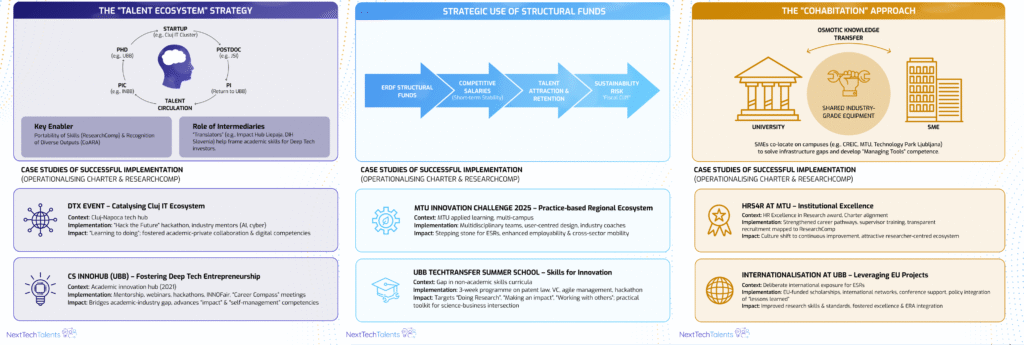
Institutions across Europe are increasingly adopting new strategies to bridge the gap between policy frameworks and real-world practice. One of the most significant shifts is the move from a linear “pipeline” model of research careers to a more flexible “ecosystem” model. In this new approach, researchers move between academia, industry, and innovation environments, gaining diverse experiences along the way. This mobility is made possible by the portability of skills defined in ResearchComp and by the growing recognition of diverse research outputs.
Another important strategy involves the use of European structural funds, particularly in countries with developing research systems. These funds are often used to enhance salaries and create opportunities that would otherwise not exist. While effective in the short term, this approach raises concerns about long-term sustainability, as funding cycles can create sudden gaps in support.
A third strategy focuses on cohabitation, where universities and companies share physical spaces. This proximity facilitates knowledge exchange and allows researchers to work with advanced technologies that would otherwise be inaccessible. As a result, early-stage researchers gain practical experience that strengthens their ability to manage tools and projects in real-world contexts.
Case studies of successful implementation
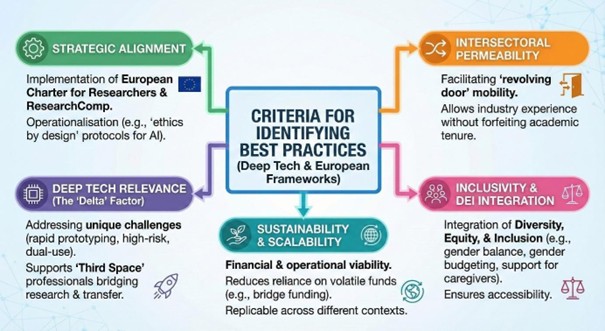
Several concrete examples illustrate how the principles of the Charter and ResearchComp are implemented in practice. The Digital Transformation eXperience (DTX) event in Cluj-Napoca demonstrates how a regional ecosystem can connect academia and industry through hands-on activities such as hackathons. By encouraging participants to solve real-world problems with the support of industry mentors, the event fosters both technical and entrepreneurial skills.
The Innovation Challenge organised by Munster Technological University highlights the value of practice-based learning. By bringing together researchers, students, and industry partners in a collaborative environment, it strengthens employability and supports mobility across sectors.
The institutional transformation at Munster Technological University through the HR Excellence in Research process shows how alignment with the Charter can lead to long-term cultural change. By improving recruitment transparency, career development, and support for researchers, the institution has created a more attractive and sustainable research environment.
At Babeș-Bolyai University, initiatives such as CS InnoHub and the TechTransfer Summer School demonstrate how universities can equip researchers with skills that go beyond traditional academic training. These programmes focus on innovation, entrepreneurship, and interdisciplinary collaboration, helping researchers navigate the interface between science and the market.
Finally, the strong emphasis on internationalisation at Babeș-Bolyai University illustrates how participation in European projects can raise research standards and integrate local practices into broader European trends. By exposing early-stage researchers to international networks, the university enhances both their skills and their career prospects.
Conclusion
The alignment of research systems with the Charter and ResearchComp is a complex and ongoing process. While significant progress has been made across Europe, important challenges remain, particularly in ensuring stable career pathways, supporting independence, and maintaining long-term sustainability.
The most successful ecosystems are those that move beyond formal compliance and focus on the everyday realities of researchers’ lives. They invest in people, encourage mobility, and build strong connections between academia and society. In doing so, they not only align with European frameworks but also create environments in which researchers can thrive and contribute meaningfully to innovation and societal progress.
Links
https://www.nexttechtalents.eu/
https://euraxess.ec.europa.eu/
Keywords
ResearchComp; European Charter for Researchers; research careers; early-stage researchers (ESR); intersectoral mobility; research funding; HR Excellence in Research (HRS4R); institutional alignment; deep tech ecosystems; research policy; innovation ecosystems; talent development; knowledge transfer; European Research Area (ERA); structural funds; career development; research governance